The office

Solid ground, so the rest can be built.

In Costa Rican practice, tierra firme is land held under title, as opposed to a concession or a right of possession. The legal meaning is narrow, and it is the one we work with every day.

The larger intention is simpler. We want a client to buy, build and stay on ground that holds, so that the life they came here to make is not sitting on a document nobody checked. Everything in this office comes from that idea.

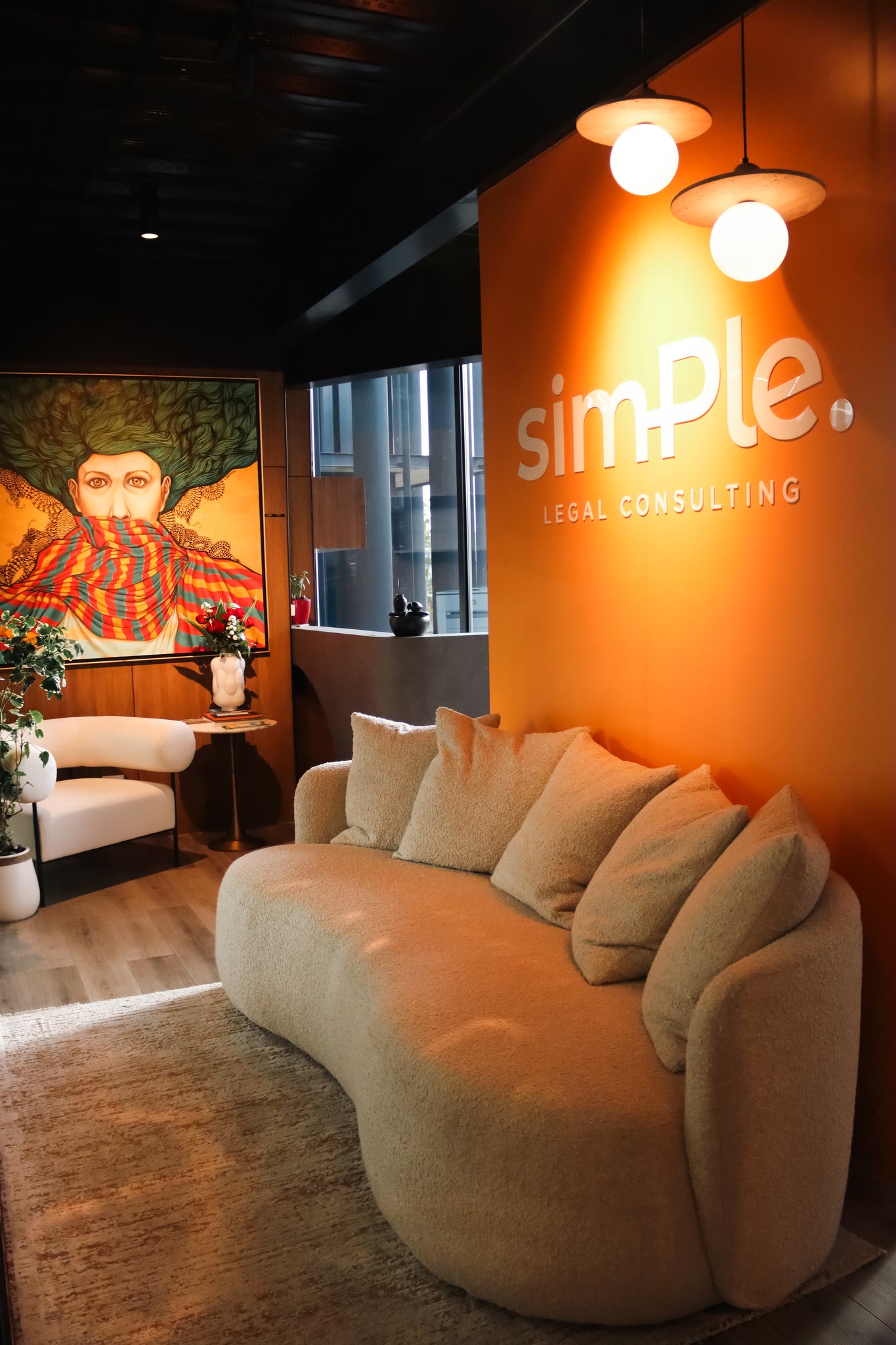
Reception with an orange wall carrying the simple. Legal Consulting wordmark and a painting from the collection
Reception. The orange wall, two pendants, and a work from the collection.

What we stand for

Order, clarity, and nothing hidden.

These come from the practice, not from a workshop, and they run the immigration work at Plan B the same way they run the property files here. We explain the complex in plain terms, give realistic timelines instead of optimistic ones, and tell the awkward finding the same week we find it.

  • 01Honesty from day one

    The uncomfortable answer arrives first, not after the invoice.

  • 02Everything in the open

    Fees, scope, deadlines, risk, and who answers for each document.

  • 03Order as a working method

    A tidy file is how a detail gets caught before it costs money.

  • 04Respect for time and money

    No unnecessary filings, no volume model, no meetings that exist to bill.

  • 05Discretion

    What is entrusted to us stays with us. Confidentiality is the job.

  • 06We act for the person paying

    The engagement is with the buyer, not the seller or the agent.

We are aware of how this profession can be used. We do the best we can for the client in front of us, in writing, and we would rather lose a matter than win it by hiding something.

The space

A room that behaves like the files.

Light, order and a few good things, because that is how we prefer to work. There is no dark room in this office, and nothing about the practice is conducted in the dark.

The office is not a statement about the firm's success. It is a working environment built on the same values as the file: clean surfaces, everything in its place, natural light, and art on the walls instead of screens.

Clients are welcome to walk through it before a meeting. What you see is what the work is like: ordered, unhurried, and open to inspection.

The collection

The office as a constellation.

The collection was assembled by Herman Duarte over years, then read as one installation. The catalogue calls it a constellation: pieces that only make their argument when they share a room.

01EntranceColour opens the door

Federico Herrero's untitled colour field, made for the space in 2026, takes the solemnity out of the threshold before anyone speaks.

02ReceptionSilence protects

Leticia Banegas's Divine Psiqui stands at reception with cloth over the mouth: a guardian of confidentiality, and a warning that silence can also erase.

03Meeting roomThe body claims presence

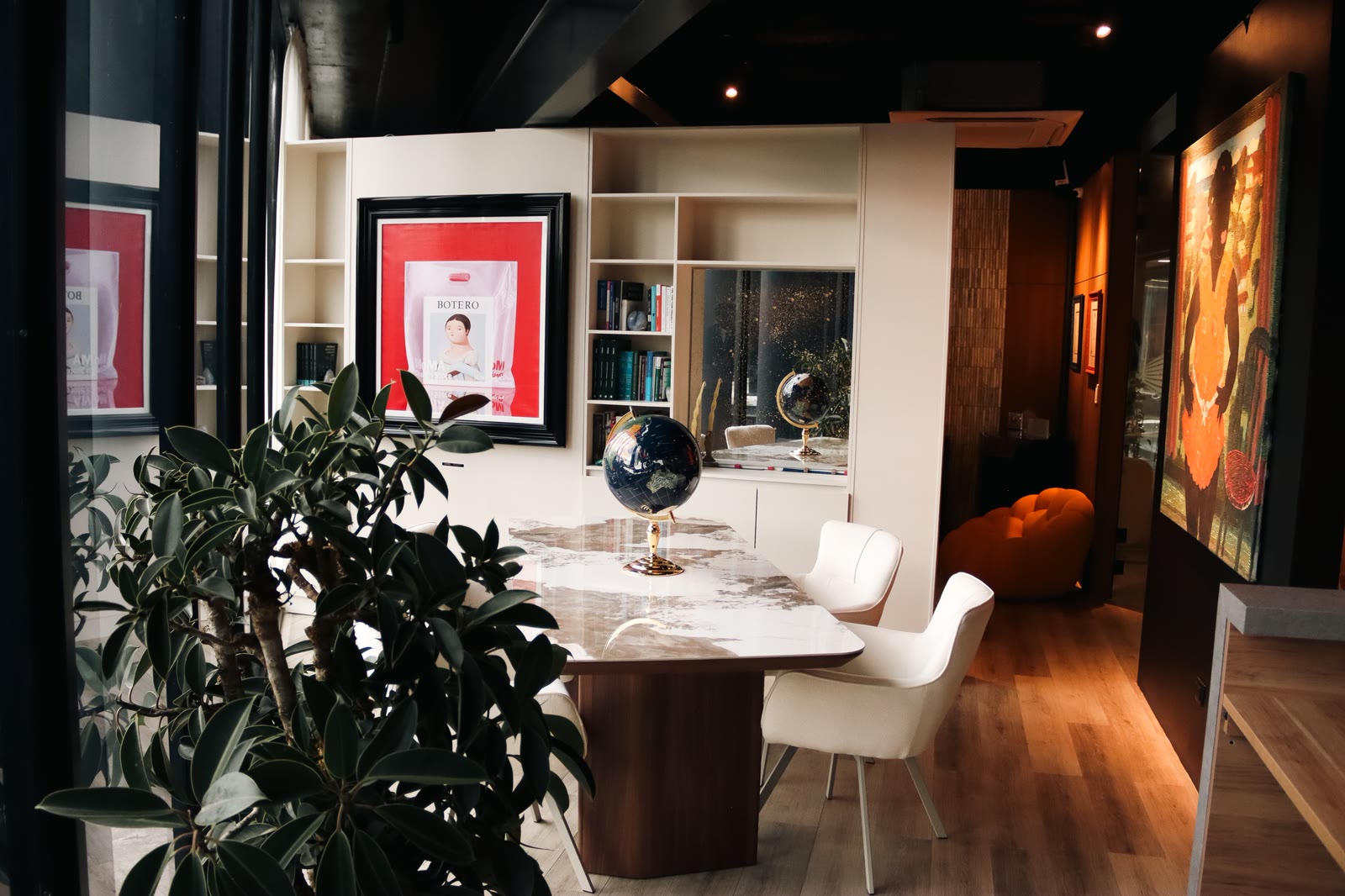
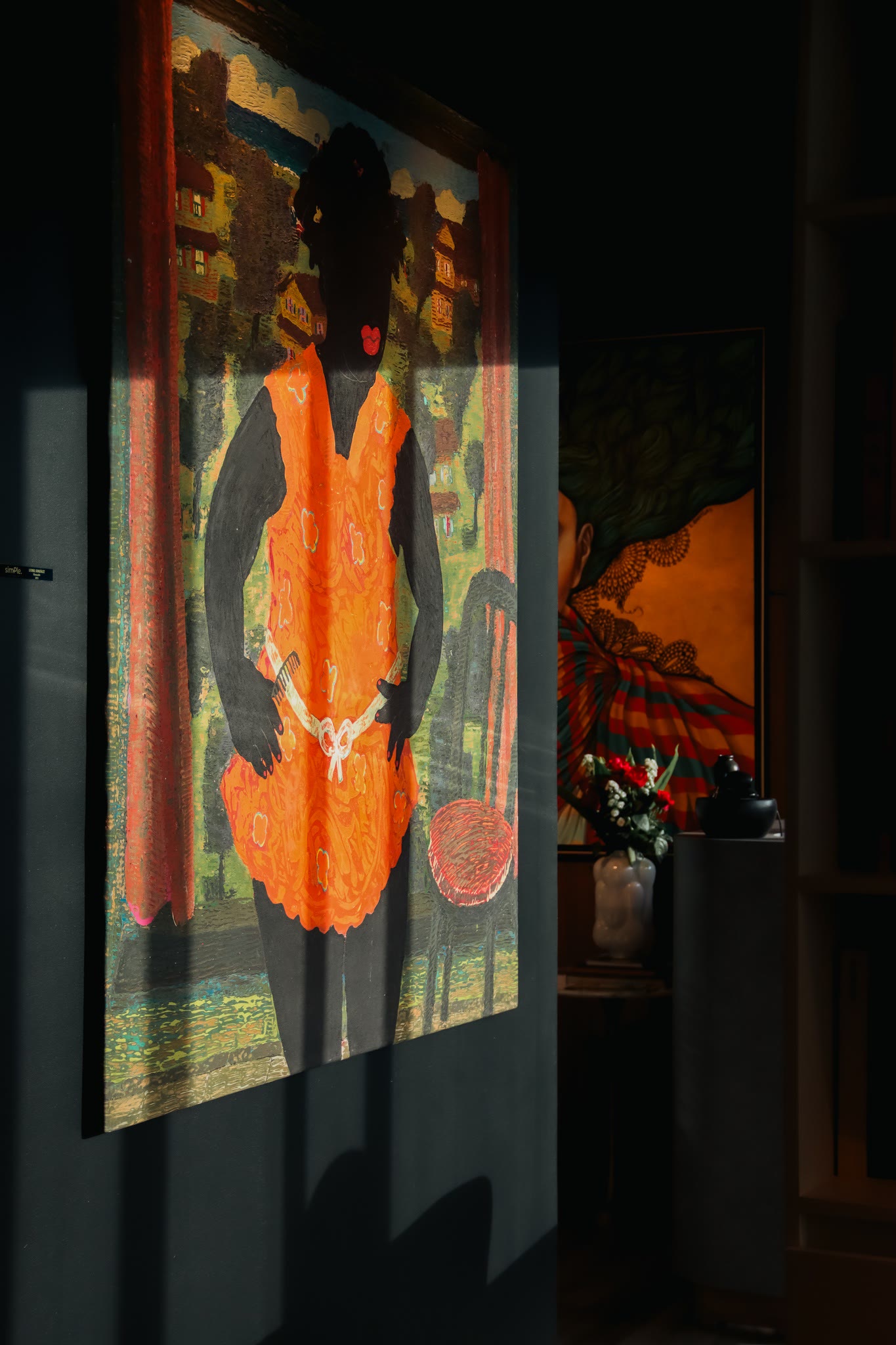
Leonel Gonzalez's Manzanillo faces Carlos Vega Faundez's Botero @ MOMA. One figure arrives without intermediaries; the other arrives packaged as culture.

04Central officeThe sphere recalls origin

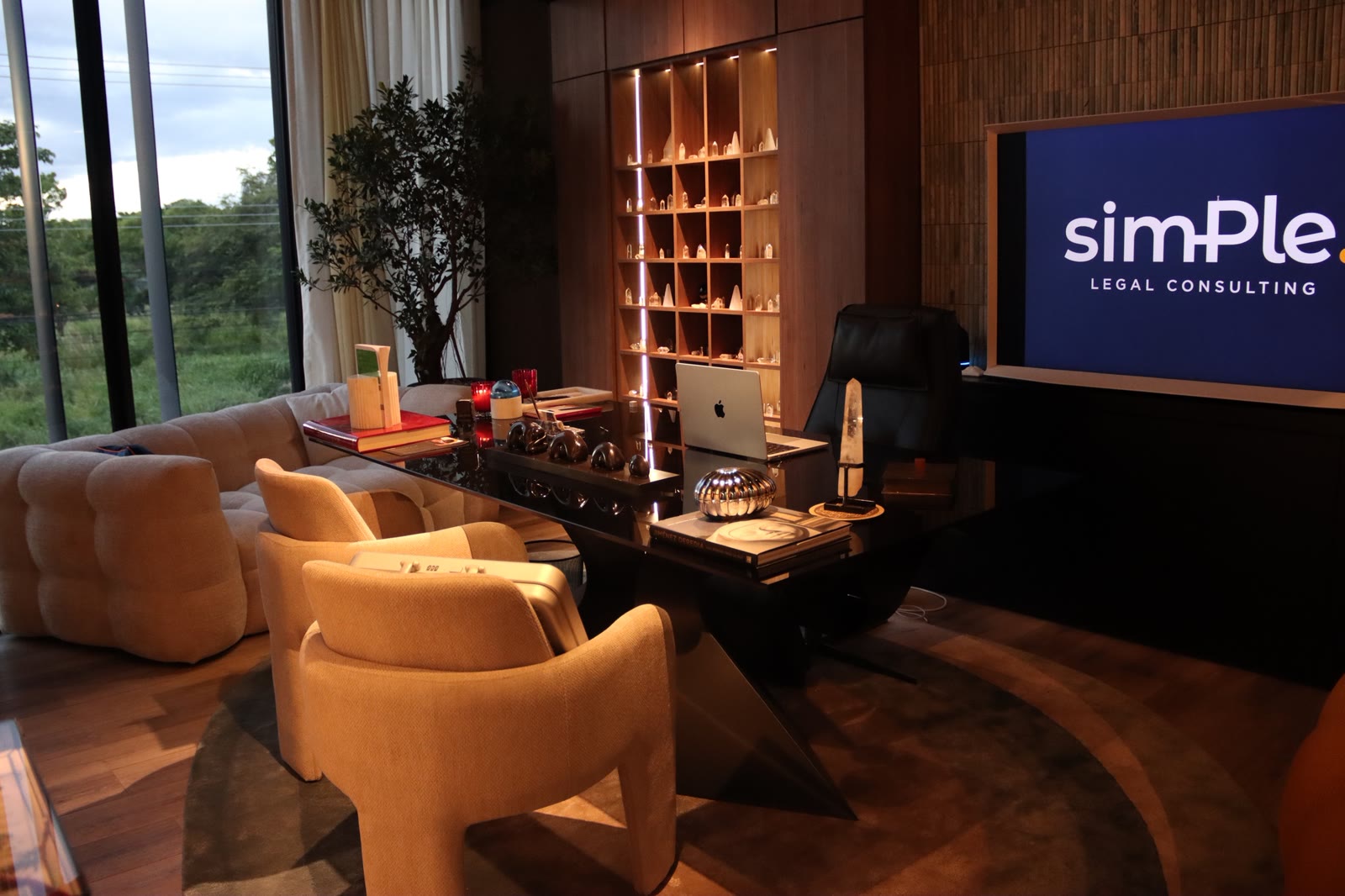
Jimenez Deredia's Genesis of Peru sits on the desk with the drawing Genesis of the Gate of Time behind it. Process does not vanish when form appears.

05LibraryAbundance beside knowledge

Money Bag, an acrylic bag that circulated under a signature nobody could verify, placed beside books about money, markets and behaviour.

Works

Who is on the walls.

Artists from Costa Rica, Chile, Honduras and the United Kingdom, alongside objects from other parts of the world: quartz, selenite, obsidian, and one small maneki-neko near the door that is not a work at all.

Works indexArtist, work, year, zone
No.ArtistWorkYearZone
01Carlos Vega FaundezBotero @ MOMA, Museum Series2020Meeting room
03Leonel GonzalezManzanillo2013Meeting room
04Federico HerreroUntitled2026Main entrance
05Leticia BanegasDivine Psiqui2015Reception
06Jimenez DerediaGenesis of Peru2009Central office
07Jimenez DerediaGenesis of the Gate of Time2012Central office
08Herman DuarteThe Cosmic Gate, 333 quartz points2026Cabinet
09Money BagMagnus Kim, later unverifiable2024Library
10Damien HirstGratitude. The Emotions, H20-72026On loan, HENI edition

Numbering follows the collection inventory and is preserved even where an intermediate number does not appear. Titles, years and locations follow the catalogue.

Three dialogues

What the room is actually arguing.

Colour opens, silence filters

At the door, Federico Herrero's chromatic fields make the entrance plural before anyone has said a word. At reception, Leticia Banegas's Divine Psiqui covers her mouth: confidentiality as care, and as a question about who gets to speak.

Together they set the ethics of entry. Herrero invites participation. Banegas asks what should not circulate. In a property file, that is the whole problem in two works.
Two bodies, two kinds of visibility

Leonel Gonzalez's Manzanillo stands with her hands on her hips, in orange, with red lips: an Afro-Caribbean presence from Limon that takes the room without asking.

Across from her, Carlos Vega Faundez's Botero @ MOMA arrives mediated by a book, a museum bag and a red field. One figure is present. The other is packaged. In a meeting room, that is a conversation about representation and access, conducted in paint.

Origin, process, and a cabinet of quartz

On the desk, Jimenez Deredia's Genesis of Peru holds the sphere inside the body. Behind it, the drawing Genesis of the Gate of Time shows the same form being worked out: circles, sequences, annotations.

Beside them, the cabinet: The Cosmic Gate, 333 points of clear quartz, selenite carved into pyramids and a sphere of obsidian, mirrored so the whole thing repeats. It is the owner's own first work, made in the room where he practises law.

The rooms

Three spaces, three jobs.

Visits by appointment, Monday to Friday. If you are already in the country, say so in writing and we will set a time.

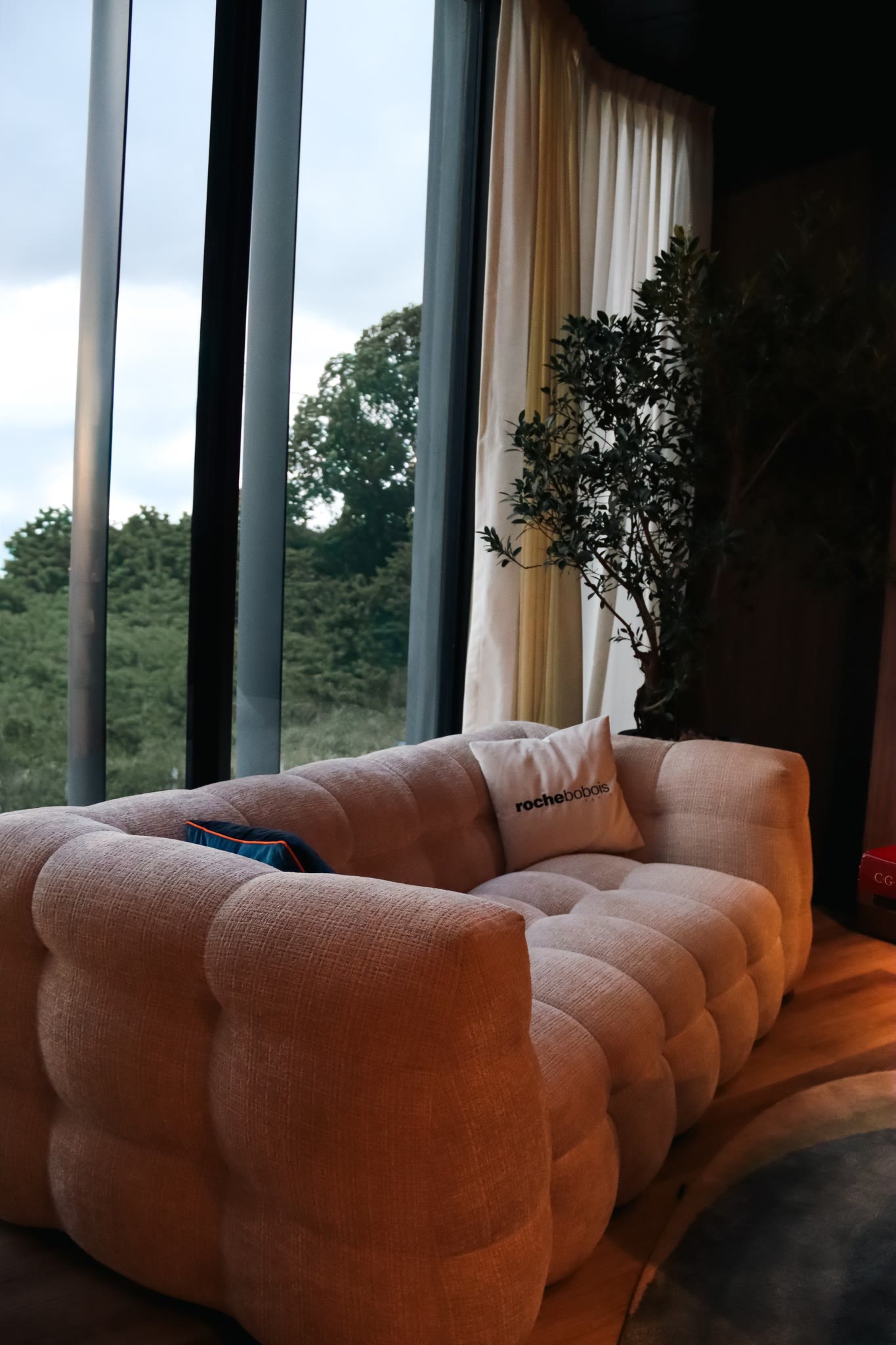
Reception is the first filter. An orange wall carries the wordmark, a curved beige sofa sits under two round pendants, and the work on the dark wall watches the door. Furniture here is international, chosen piece by piece: the sofa is a Roche Bobois, the pendants are round and white, the rug is quiet.

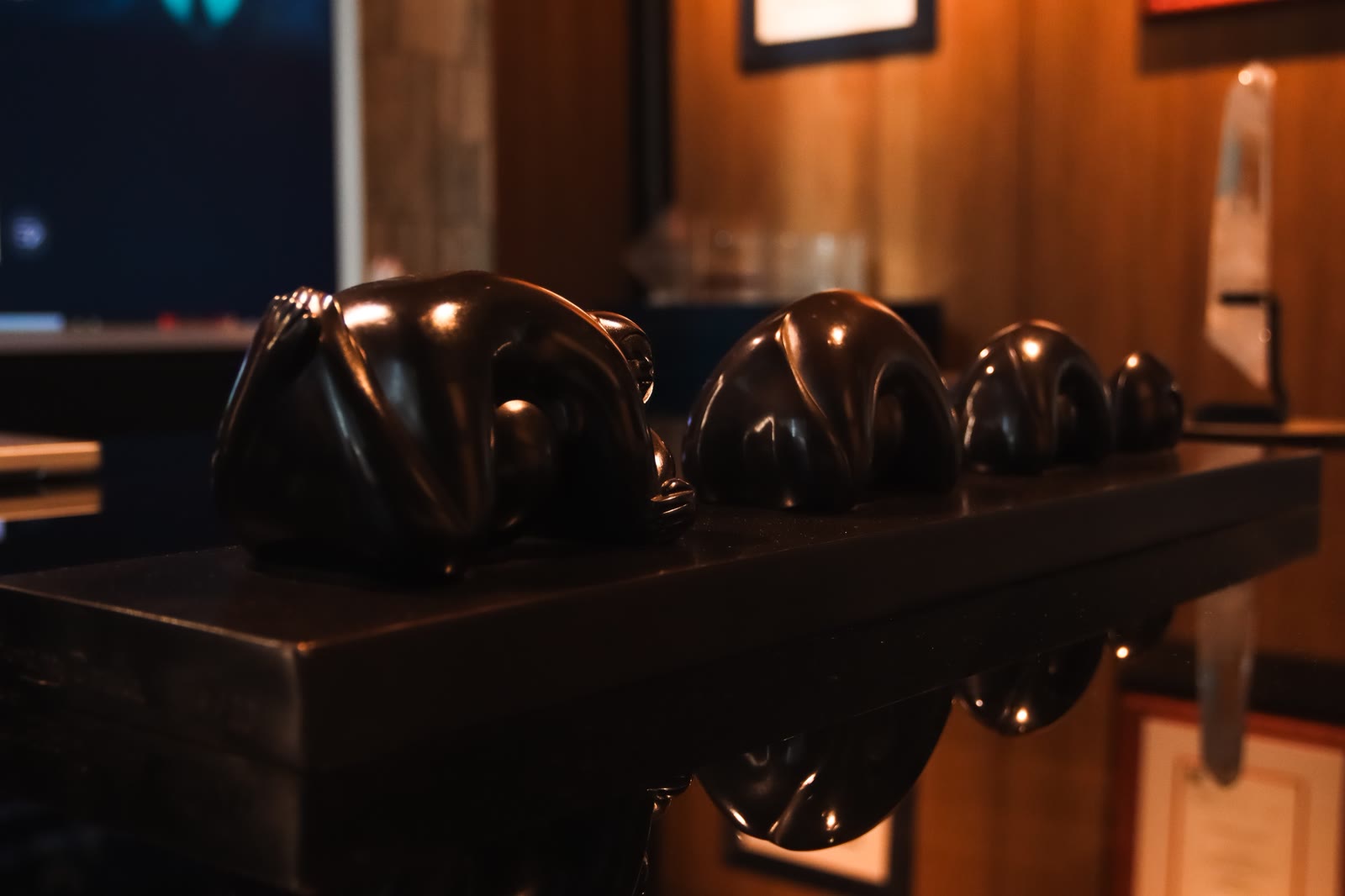
The meeting room is where the file is opened. A marble table on a dark wood base seats four. A blue globe with gold meridians sits at one end, a shelf behind it holds a row of dark figures, and Manzanillo faces Botero @ MOMA across the table while a client decides whether to sign.

How we work

Four steps, and one rule: say the difficult thing early.

The same method runs the immigration practice at Plan B and the property work here. It is not a slogan; it is the order in which things get done on a file.

  1. 01

    Listen first

    A free first conversation, before forms and before fees. We ask what the objective is, what the deadline is, and what has already been tried.

  2. 02

    Explain the options

    What is possible, what is not, what it costs in time, and where the risk sits. No inflated expectations and no surprise endings.

  3. 03

    Draft the route

    Documents, order of operations, the people involved and a realistic date. The obstacle gets named before it becomes an invoice.

  4. 04

    Stay to the end

    One person carries the file from the first call to the registry entry. Your case is not passed around.

The principles are the six above, under what we stand for. This is the order in which they get applied.

“I did not bring these works together to fill walls. I brought them together so that the office could hold memory, tension, and conversation.”Herman Duarte, collector's note

The rest of that note is the argument for the room: colour opened the entrance, silence protected reception, the body claimed presence, the sphere recalled origin, quartz turned a cabinet into a threshold, and gratitude announced what is still to come.

A property decision is a set of constraints that arrives with a price. The collection does not illustrate that, and it is not meant to. It slows the room down, which is the only thing a law office really needs to do.

Office desk with a laptop, a wide screen showing the firm wordmark and a view to green hills

Come and see it.

If you are already in Costa Rica, book a time and we will meet at the office in Lindora rather than on a video call. Bring the listing, or just the question.

Address
Futura Business and Plaza, Oficina A105. Lindora, Santa Ana, San José.
Hours
Monday to Friday, 09:00 to 18:00, Central time.
Phone
+506 6182 6836
Email
hd@simple-legal.consulting